





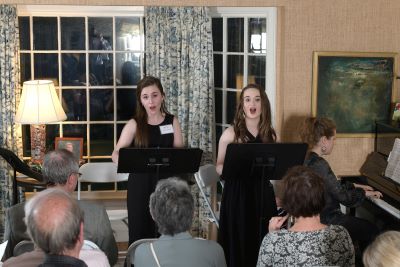
The Portland Conservatory Music Certification is a competitive and professionally oriented program dedicated to the musical and personal growth of musicians of all ages.
There are two certification levels, Standard and Advanced, that offer a diverse mix of classroom, ensemble, performance and lecture over the course of 4-6 semesters.
Upon completion of the program students will receive a certificate and transcript detailing the courses, ensembles and lessons that they completed while at the Portland Conservatory of Music.
Students meet on Saturdays and receive instruction in Music Theory, Music History, Ear Training and Chamber Music.
To participate, please note that students must be able to read music notation.
| Requirement | Semester | Standard Certification | Advanced Certification |
|---|---|---|---|
| Intro to Western Music History | Fall | ● | ● |
| Music History Elective | Spring | ● | ● |
| Music History Elective 2 | Spring | ● | ●● |
| Music Theory I | Fall | ● | ● |
| Music Theory II | Spring | ● | ● |
| Music Theory Elective | Fall | ● | ●● |
| Chamber Music Seminar | Fall & Spring | 4 Semesters | 6 Semesters |
| Private Lessons* | Fall & Spring | 4 Semesters | 6 Semesters |
| Large Ensemble *** | Fall & Spring | 1 Semester | 2 Semesters |
| Basic Piano Proficiency Lessons**** | Fall & Spring | 1 Semester | 1 Semester |
| Final Jury | ● | ● | |
| Final Public Recital | ● |
* Music Electives include classes such as: The life of Bach, Romanticism in Music, History of Opera, XXI Century Music, Jazz Theory, Jazz History.
** Lessons are required to be taken with PCM faculty, a minimum of 4 lessons per semester. If you are enrolled in lessons outside of PCM, you may apply for a waiver to this requirement.
*** Examples include PCM ensembles such as choir, middle Eastern ensemble, jazz ensemble, or approved outside ensembles such as youth symphony or school orchestra/band.
****Or satisfactory piano proficiency exam
Music Theory
This course examines the fundamentals of music composition of the common practice period. Pitch, rhythm, and elements of harmony such as intervals, scales, and chords are just a few of the concepts explored.
Voice leading, musical forms and structures, as well as analytical devices are covered later in the course.
The course is divided into two semesters:
- Music Theory I – offered in the fall semester
- Music Theory II – offered in the spring semester
- Music Theory Electives – offered in the fall and spring semesters
Each class involves a lecture, discussion about the class topics, in-class exercises, and written assignments.
Music History
This course is dedicated to the history of Western music, spanning from the surviving examples of ancient music to contemporary pieces from around the world. The course focuses on a select group of notable compositions and composers from the Baroque, Classical, Romantic, and Modern periods and is designed to promote curiosity and enthusiasm for classical music.
The Music History course will also provide an opportunity to become familiar with the social and political role of music making throughout centuries, as well as musical elements related to each of those stages.
The course is divided into two semesters:
- Music History I – offered in the fall semester
- Music History II – offered in the fall semester
- Music History Elective – offered in the fall and spring semesters
Each class involves a lecture, listening examples, discussion about the class topics, and listening assignments.
Ear Training
This course is designed to develop the aural and singing skills of students, focusing on the tonal system and early examples of chromaticism.
Music sight-reading, rhythmic competency, singing and hearing ability, chord and interval identification, and transcription ability are some of the student learning outcomes.
Students will also learn to utilize all these skills to improve their performance skills for lessons and ensembles.
Chamber Music
Chamber ensembles of voice and mixed instruments, string quartets, trios, and many other instrumentations are formed by students, according to enrollment.*
Students are coached by a faculty member and will rehearse independently. This class develops the student’s ability to collaborate efficiently and fosters appropriate rehearsal etiquette.
Students will also achieve a deeper understanding of the style of the pieces they are performing, through exposure to information about the historical context and the composer’s ideals.
At the end of this course, students will perform in concert the selected repertoire for the chamber ensemble in which they participate.
*Non-PCM students will be accepted to participate in a given ensemble on a case by case basis.
Additional Advanced Electives
Additional advanced electives are offered on a rotating basis, once students have finished the regular curriculum.
Some of the classes offered are:
- Post-tonal Theory
- History of 20th Century Music
- Music of J. S. Bach
- Music of Latin America
- Diction for Singers
- Romanticism in Music
- History of Opera
- Jazz Theory
- Jazz History
- Middle Easter Ensemble
Do you have questions?
Please give us a call at (207) 775-3356 or email our Registrar.